

If you’ve ever felt frustrated by dieting, discouraged by weight regain, or overwhelmed by conflicting health advice, you’re not alone.
Weight management remains one of the most complex health challenges facing Canadians today. While scientific advances have transformed obesity treatment, many people still struggle with emotional eating, stress-related habits, metabolic health concerns, and maintaining long-term results.
In 2026, the conversation around weight management has evolved significantly. The focus is no longer solely on calorie counting or willpower. Instead, healthcare professionals increasingly recognize that successful weight management requires an integrated approach that considers biology, psychology, lifestyle, environment, and individual circumstances.
At Wellness Experts, serving clients across Toronto, Thornhill, and Vaughan, we believe sustainable weight loss starts with understanding the whole person—not just the number on the scale. Through evidence-based psychotherapy, behavioral change support, and personalized wellness strategies, we help clients address the deeper factors influencing their relationship with food, movement, stress, and health.
This article explores the latest developments in weight management for 2026, including emerging medications, behavioral science breakthroughs, and practical strategies that support long-term success.
Why Weight Management Remains a Major Health Concern in Canada
According to the Government of Canada, obesity continues to affect a significant proportion of Canadian adults and remains associated with increased risks of:
- Type 2 diabetes
- Cardiovascular disease
- Sleep apnea
- Certain cancers
- Osteoarthritis
- Mental health challenges
The challenge isn’t simply losing weight.
The greater challenge is maintaining improvements over time.
Research consistently shows that long-term success depends on sustainable behavior change, psychological resilience, supportive healthcare relationships, and individualized treatment plans—not short-term diets.
This reality is reshaping how leading weight management clinics approach care.
The Biggest Weight Management Trends in 2026
1. GLP-1 Medications Continue to Transform Treatment
Perhaps the most significant development in obesity medicine has been the rise of GLP-1 receptor agonists.
Medications such as:
- Semaglutide (Wegovy®, Ozempic®)
- Tirzepatide (Zepbound®, Mounjaro®)
have demonstrated substantial weight loss outcomes in clinical trials.
According to research published in the New England Journal of Medicine and guidance from the American Diabetes Association (ADA), these medications work by:
- Increasing satiety
- Slowing gastric emptying
- Reducing appetite
- Improving blood glucose regulation
However, experts increasingly emphasize that medication alone is rarely enough.
Many patients benefit most when pharmacotherapy is combined with:
- Behavioral counseling
- Nutrition support
- Physical activity programs
- Psychological interventions
At Wellness Experts, we often help clients address the emotional and behavioral patterns that remain even when appetite is reduced through medication.
2. The Next Generation: Retatrutide and CagriSema
The obesity medicine landscape continues to evolve rapidly.
Emerging treatments generating significant attention include:
Retatrutide
Often described as a “triple agonist,” retatrutide targets multiple metabolic pathways simultaneously and has demonstrated remarkable weight-loss outcomes in clinical research.
CagriSema
A combination of semaglutide and cagrilintide, CagriSema aims to enhance appetite regulation and metabolic outcomes.
While regulatory approvals and long-term data continue to develop, these therapies represent a broader shift toward personalized obesity treatment.
3. AI-Powered Personalized Weight Management
Artificial intelligence is increasingly being integrated into healthcare delivery.
In 2026, many programs now incorporate:
- Continuous health tracking
- Personalized habit recommendations
- Predictive behavior analytics
- Remote monitoring
- Smart nutrition coaching
Rather than replacing clinicians, AI is becoming a tool that enhances personalization and engagement.
The most successful programs combine technology with human support, accountability, and clinical expertise.
4. Hybrid Care Models Are Becoming Standard
Virtual care expanded dramatically during the past several years and continues to reshape healthcare delivery.
Today’s leading weight management programs often combine:
- In-person consultations
- Virtual psychotherapy
- Telehealth coaching
- Digital progress monitoring
- Collaborative care teams
This hybrid model increases accessibility while maintaining personalized support.
For busy Toronto professionals, parents, and commuters, flexible care options can significantly improve adherence and outcomes.
5. Muscle Preservation Is Now a Major Priority
A growing concern associated with rapid weight loss is the loss of lean muscle mass.
Experts increasingly recommend:
- Resistance training
- Adequate protein intake
- Body composition monitoring
- Progressive strength programs
The goal is no longer simply losing weight.
The goal is improving body composition, metabolic health, and physical function.
Recent Weight Management News and Developments
Several noteworthy developments continue shaping obesity care in 2025 and 2026:
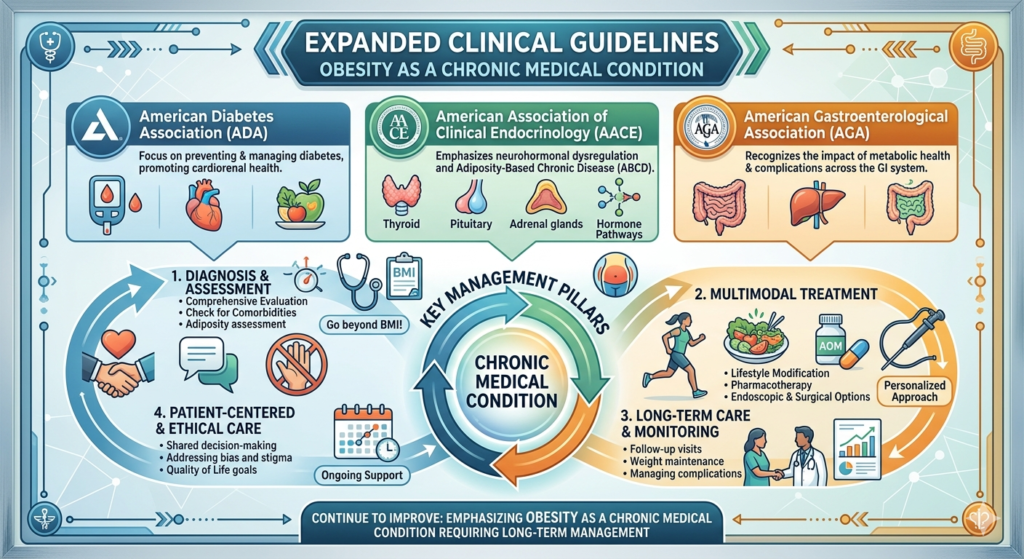
Expanded Clinical Guidelines
Major organizations including:
- American Diabetes Association (ADA)
- American Association of Clinical Endocrinology (AACE)
- American Gastroenterological Association (AGA)
Continueto improve emphasizing obesity as a chronic medical condition requiring long-term management.
Increased Insurance Coverage Discussions
Across North America, policymakers and insurers continue evaluating broader access to obesity medications and multidisciplinary treatment programs.
Growing Emphasis on Mental Health Integration
Clinical leaders increasingly acknowledge that sustainable weight management requires addressing:
- Emotional eating
- Stress
- Trauma
- Sleep quality
- Anxiety
- Depression
This shift aligns closely with our philosophy at Wellness Experts.
Evidence-Based Clinical Advice for Sustainable Weight Loss
Focus on Sustainable Nutrition Patterns
Highly restrictive diets often fail because they are difficult to maintain.
Current evidence supports dietary approaches emphasizing:
- Whole foods
- Adequate protein
- Fiber-rich vegetables
- Healthy fats
- Balanced meal timing
Practical recommendations include:
- Eating consistently throughout the day
- Avoiding prolonged cycles of restriction and overeating
- Prioritizing protein at meals
- Staying hydrated
Understanding Meal Spacing and the Migrating Motor Complex
Emerging interest continues around meal timing and digestive health.
Some clinicians discuss supporting the migrating motor complex (MMC)—a digestive process that helps clear food and debris between meals.
Practical strategies may include:
- Avoiding constant snacking
- Creating appropriate spacing between meals
- Following individualized recommendations from healthcare providers
However, meal timing should always be personalized and balanced with medical needs.
Exercise Recommendations for 2026
According to global physical activity guidelines, adults should aim for:
- At least 150 minutes of moderate-intensity exercise weekly
- Muscle-strengthening activities at least twice weekly
Effective options include:
- Walking
- Cycling
- Swimming
- Resistance training
- Group fitness classes
The best exercise program is often the one you can sustain consistently.
Consider Body Composition, Not Just Weight
The scale tells only part of the story.
Important markers include:
- Muscle mass
- Waist circumference
- Blood pressure
- Energy levels
- Blood sugar control
- Physical fitness
Tracking multiple health indicators often provides a more meaningful picture of progress.
Why Mental Health Matters in Weight Management
One of the most overlooked aspects of sustainable weight loss is psychological health.
Many individuals struggling with weight have experienced:
- Chronic stress
- Emotional eating
- Anxiety
- Trauma
- Low self-esteem
- Perfectionism
- Life transitions
These factors can strongly influence eating patterns and lifestyle habits.
The Psychology Behind Emotional Eating
Food often serves purposes beyond physical nourishment.
People may eat to:
- Manage stress
- Cope with loneliness
- Reduce anxiety
- Seek comfort
- Regulate emotions
Without addressing these underlying drivers, weight regain becomes more likely.
How Psychotherapy Supports Long-Term Success
At Wellness Experts, our approach incorporates evidence-based therapies that help clients build sustainable change.
Cognitive Behavioral Therapy (CBT)
CBT helps identify and modify thought patterns that contribute to unhealthy habits.
Examples include:
- All-or-nothing thinking
- Self-criticism
- Catastrophic thinking around setbacks
Dialectical Behavior Therapy (DBT)
DBT supports:
- Emotional regulation
- Distress tolerance
- Mindfulness
- Impulse management
These skills can be particularly helpful for emotional eating.
Internal Family Systems (IFS)
IFS helps individuals understand internal conflicts and protective patterns that may influence food-related behaviors.
Emotionally Focused Therapy (EFT)
EFT supports healthier emotional processing and relationship dynamics.
Motivational Interviewing
Motivational Interviewing helps strengthen commitment to meaningful, lasting change.
Meet Samaneh Bayat: Supporting Sustainable Change
At Wellness Experts, psychotherapy services are led by Samaneh Bayat, Registered Psychotherapist (RP) and Canadian Certified Counsellor (CCC).
Samaneh holds advanced education in:
- Counseling Psychology
- Public Policy
Her professional background includes:
- Extensive experience supporting emotional eating and habit change
- More than 200 hours of community mental health education
- Expertise in CBT, DBT, EFT, IFS, and Motivational Interviewing
- Support for trauma recovery, anxiety, cultural adjustment, and sustainable wellness behaviors
Learn more about Samaneh Bayat here:
Her approach recognizes that long-term health improvements often begin with understanding the emotional and psychological factors that shape behavior.
Toronto-Specific Insights: Why Personalized Care Matters
Toronto is one of the most diverse cities in the world.
Weight management plans must account for:
- Cultural food traditions
- Family expectations
- Work schedules
- Immigration experiences
- Stress levels
- Socioeconomic factors
A one-size-fits-all approach rarely works.
At Wellness Experts, we provide culturally sensitive care tailored to each client’s circumstances and goals.
Our Integrated Approach
We support clients through:
- Individual psychotherapy
- Behavioral change coaching
- Emotional eating interventions
- Habit development strategies
- Accountability and maintenance planning
- Virtual and in-person appointments
Whether someone is using GLP-1 medications or pursuing lifestyle changes alone, psychological support can strengthen long-term outcomes.
Preventing Weight Regain After Weight Loss
One of the most important conversations in obesity medicine today focuses on maintenance.
Research consistently shows that biological mechanisms often encourage weight regain after significant weight loss.
Strategies That Support Long-Term Maintenance
Continue Physical Activity
Exercise remains one of the strongest predictors of long-term weight maintenance.
Maintain Strength Training
Preserving muscle supports metabolism and overall health.
Build Structured Habits
Successful maintainers often:
- Plan meals
- Monitor progress
- Maintain routines
- Adapt quickly after setbacks
Address Emotional Triggers
Ongoing emotional awareness can prevent stress-related eating patterns from returning.
Consider Long-Term Medical Follow-Up
For many individuals, obesity management requires ongoing care rather than short-term treatment.
Frequently Asked Questions
Are GLP-1 medications safe?
They can be effective for many individuals when prescribed and monitored appropriately. Potential side effects include gastrointestinal symptoms, and treatment decisions should be made with a qualified healthcare provider.
Can therapy help with weight loss?
Research suggests behavioral and psychological interventions can significantly improve adherence, emotional regulation, and long-term outcomes.
Do I need medication to lose weight?
Not necessarily. Treatment should be individualized based on medical history, goals, and clinical recommendations.
What is the most sustainable approach?
Most experts recommend a combination of nutrition, physical activity, psychological support, and medical care when appropriate.
Looking Ahead: A More Compassionate Future for Weight Management
The future of weight management is not about chasing perfection.
It’s about understanding the complex relationship between biology, psychology, lifestyle, and environment.
In 2026, the most effective approaches combine evidence-based medicine with compassionate, personalized care.
At Wellness Experts, we believe sustainable weight loss begins by supporting the whole person—not simply focusing on the scale.
If you’re ready to explore a more balanced, realistic approach to health and weight management, we’re here to help.
Book a Consultation
Whether you’re struggling with emotional eating, navigating life on a GLP-1 medication, or seeking long-term weight management support, our team can help you create a personalized plan that fits your life.
Visit: https://wellnessexperts.ca/
Or learn more about our services and approach to sustainable wellness today.
According to the Public Health Agency of Canada, maintaining a healthy weight can help reduce the risk of chronic conditions such as type 2 diabetes, heart disease, and certain cancers, while supporting overall health and well-being.
References
- Government of Canada – Obesity in Canada: https://health-infobase.canada.ca
- American Diabetes Association Standards of Care 2025: https://diabetesjournals.org/care
- American Association of Clinical Endocrinology (AACE): https://www.aace.com
- American Gastroenterological Association Obesity Guidelines: https://gastro.org
- New England Journal of Medicine – Semaglutide STEP Trials: https://www.nejm.org
- New England Journal of Medicine – Tirzepatide SURMOUNT Trials: https://www.nejm.org
- Mayo Clinic – Obesity Treatment: https://www.mayoclinic.org
- Cleveland Clinic – Obesity and Weight Management: https://my.clevelandclinic.org
- World Health Organization Physical Activity Guidelines: https://www.who.int
- National Institutes of Health – Behavioral Interventions for Obesity: https://www.nih.gov
- Grand View Research – Weight Management Market Forecasts: https://www.grandviewresearch.com
- Obesity Canada Clinical Practice Guidelines: https://obesitycanada.ca