
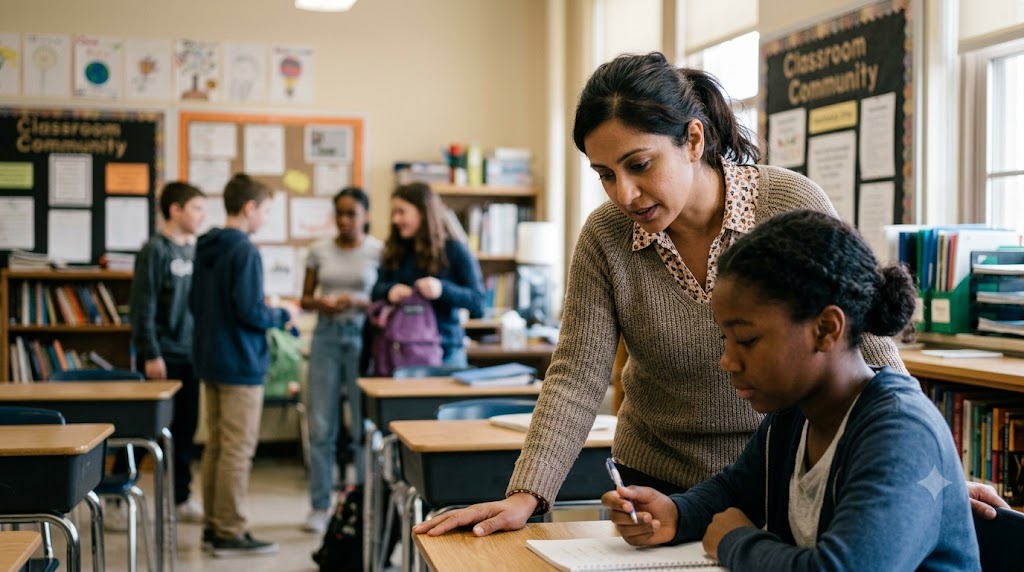
For some students, the school day begins long before they enter the classroom. They may arrive carrying worries about family conflict, financial pressure, separation, illness, housing instability, caregiving responsibilities, or other challenges at home.
Teachers may notice the effects without knowing the full story. A student who was previously engaged may become withdrawn. Another may become unusually irritable, distracted, tired, or anxious. Some students may struggle to complete assignments, while others may act out or avoid participating.
When home stress follows students to school, teachers can help in real ways. They do not need to become therapists or solve problems that belong outside the classroom. Instead, they can provide stability, recognize changes in behaviour, respond with empathy, and connect students with appropriate support.
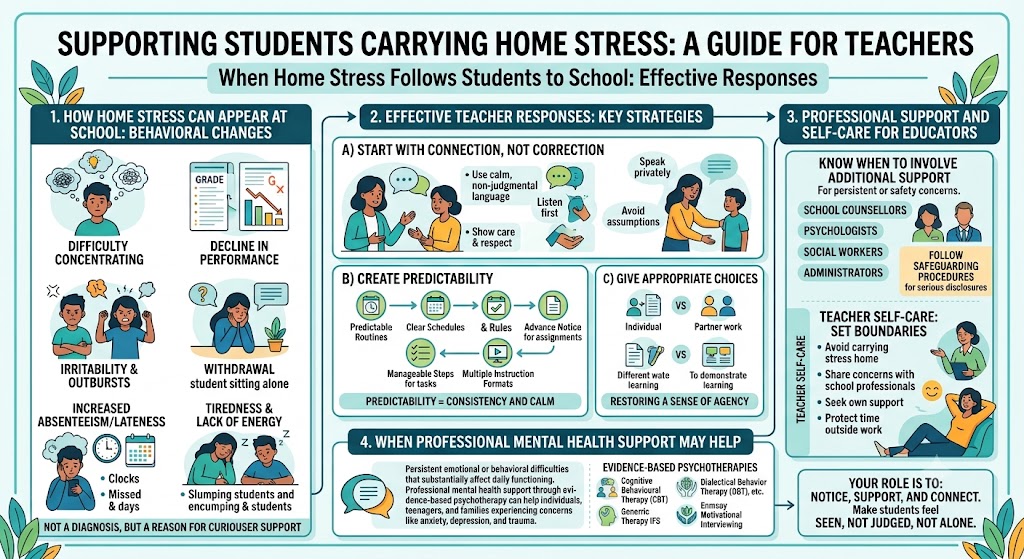
How home stress can appear at school
Stress does not look the same in every student. Some children and teenagers may openly express frustration or sadness, while others may hide their emotions.
Teachers might notice:
- Difficulty concentrating or remembering instructions
- A sudden decline in academic performance
- Frequent tiredness or lack of energy
- Irritability, anger, or emotional outbursts
- Withdrawal from classmates or classroom activities
- Increased absenteeism or lateness
- Changes in eating or sleeping patterns
- Anxiety about going home or completing schoolwork
- Difficulty managing ordinary classroom frustrations
These behaviours don’t automatically indicate a mental health disorder. A change in behaviour is a reason to get curious and be supportive, not to diagnose.
Start with connection, not correction
When a student is struggling, the first response can make a real difference.
Instead of immediately asking, “Why aren’t you doing your work?” a teacher might privately say, “I’ve noticed you’ve seemed quieter than usual lately. Is there anything you would like me to know?”
The goal isn’t to pressure the student into sharing personal details. It’s to show that someone has noticed, and that the classroom is still a safe, respectful place.
Simple actions can help:
- Speak privately rather than calling attention to the student publicly.
- Use calm, non-judgmental language.
- Listen without immediately trying to fix the situation.
- Avoid assumptions about what is happening at home.
- Give the student reasonable opportunities to regain focus.
For a young person facing instability elsewhere, predictable and respectful interactions at school can offer real consistency.
Create predictability in the classroom
Stress can make it harder for students to concentrate, organize tasks, and manage emotions. Teachers can reduce unnecessary uncertainty by making classroom expectations clear.
A predictable routine might include:
- Clearly communicated schedules
- Consistent classroom rules
- Advance notice of major assignments or changes
- Breaking larger tasks into manageable steps
- Allowing appropriate opportunities for brief breaks
- Providing clear instructions in more than one format when possible
These strategies do not mean lowering expectations. Instead, they can make expectations easier to understand and manage.
Give students appropriate choices
A student experiencing stress may feel that many aspects of life are outside their control. Offering small, appropriate choices at school can sometimes help restore a sense of agency.
For example, a teacher might allow a student to choose between completing an assignment independently or working with a partner, or offer two reasonable options for demonstrating their understanding.
The key is maintaining boundaries. Teachers can provide flexibility without becoming responsible for managing a student’s entire emotional life.
Know when to involve additional support
Teachers should not be expected to handle serious or ongoing concerns alone.
If a student’s difficulties persist, significantly interfere with learning, or raise concerns about their safety or well-being, school-based professionals and established safeguarding procedures may need to step in.
Depending on the school system, this may include a school counsellor, psychologist, social worker, administrator, or other qualified professional.
If a student discloses abuse, neglect, self-harm, suicidal thoughts, or another immediate safety concern, teachers should follow their school’s safeguarding and reporting procedures rather than trying to handle it alone.
Support the student without carrying the stress home
There’s another side to this that’s easy to overlook: teachers can absorb the emotional weight of supporting distressed students, too.
Teaching already involves substantial emotional labour. Continually worrying about students after school can lead to exhaustion and make it harder to maintain healthy boundaries.
Teachers can support students while also recognizing their own limits. Appropriate boundaries might include:
- Following established referral procedures
- Sharing concerns with the appropriate school professional
- Avoiding becoming a student’s sole source of emotional support
- Taking breaks and protecting time outside work
- Seeking professional support when stress becomes difficult to manage
Supporting students effectively requires sustainable support for educators, too.
When professional mental health support may help
Sometimes classroom support is not enough. A student may benefit from professional mental health care when emotional or behavioural difficulties persist or substantially affect daily functioning.
Samaneh Bayat, M.A., Registered Psychotherapist (RP) and Canadian Certified Counsellor (CCC), provides evidence-based psychotherapy and mental health support through Wellness Experts. Her clinical training includes Cognitive Behavioral Therapy (CBT), Dialectical Behavior Therapy (DBT), Emotionally Focused Therapy (EFT), Internal Family Systems (IFS), and Motivational Interviewing. She has also provided more than 200 hours of volunteer mental health lectures and workshops within the Iranian community in Canada.
Her professional background includes supporting individuals, teenagers, couples, and families experiencing concerns such as anxiety, depression, trauma, mood difficulties, and adjustment challenges.
A teacher’s role is to notice, support, and connect
Teachers cannot control what happens inside a student’s home. They cannot remove every source of stress, and they should never be expected to function as mental health professionals.
But they can notice, listen, and create a predictable classroom environment. And they can help connect a young person with the right support when it’s needed.
For students carrying the weight of home stress into school, sometimes one of the most meaningful messages a teacher can send is simple: “You are seen, you are not being judged, and you do not have to handle everything alone.”